How Long Should Your Hair Be Before Starting Locs
Disclosure: Some of the links in this post are affiliate links. This means if you click on the link and purchase an item, I will receive an affiliate commission at no extra cost to you. All opinions remain my own. I only recommend products or services I believe will add value to my readers.
This post walks you through how long should your hair be before starting locs.
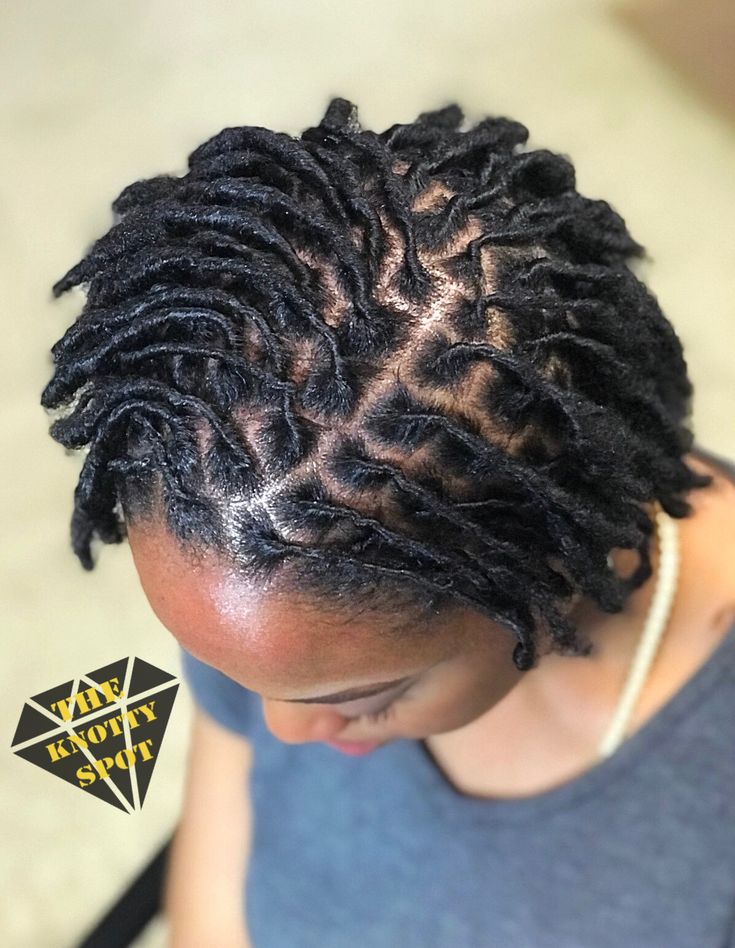
One of the most common questions people ask before starting their loc journey is about hair length. It’s usually the first concern that comes to mind, and for good reason. Starting locs is a big decision, and many people want to be sure they’re doing it “the right way” from the very beginning. If you’ve been thinking about starting locs, you’ve probably asked yourself questions like: “Is my hair too short?” “Should I wait for more growth before I begin?” or “Will short hair actually loc properly?” These are completely valid concerns, especially with the amount of conflicting information out there about what length is considered ideal.
The truth is, many people delay starting their locs simply because they believe their hair isn’t long enough. Others worry that starting too early might lead to poor results, unraveling, or difficulty maintaining their locs. This uncertainty often creates hesitation and can slow down the decision-making process.
However, here’s the reassuring part: locs can be started on different hair lengths. There is no single “perfect” length that applies to everyone. Whether your hair is short, medium, or longer, there are methods and techniques that can work effectively depending on your texture and maintenance routine.
In this guide, we’ll break down everything you need to know about hair length and locs. You’ll learn the ideal length ranges, how different starter methods work with various hair lengths, and the key signs that indicate whether you’re truly ready to begin your loc journey. By the end, you’ll have the clarity and confidence to move forward without second-guessing your hair length.
Is There a Minimum Hair Length Required for Locs?
There is no strict universal rule that says your hair must reach a specific length before you can start locs. Locs are not dependent on a single fixed measurement; instead, they are influenced by a combination of factors such as hair texture, the method used, and how well your hair is maintained over time.
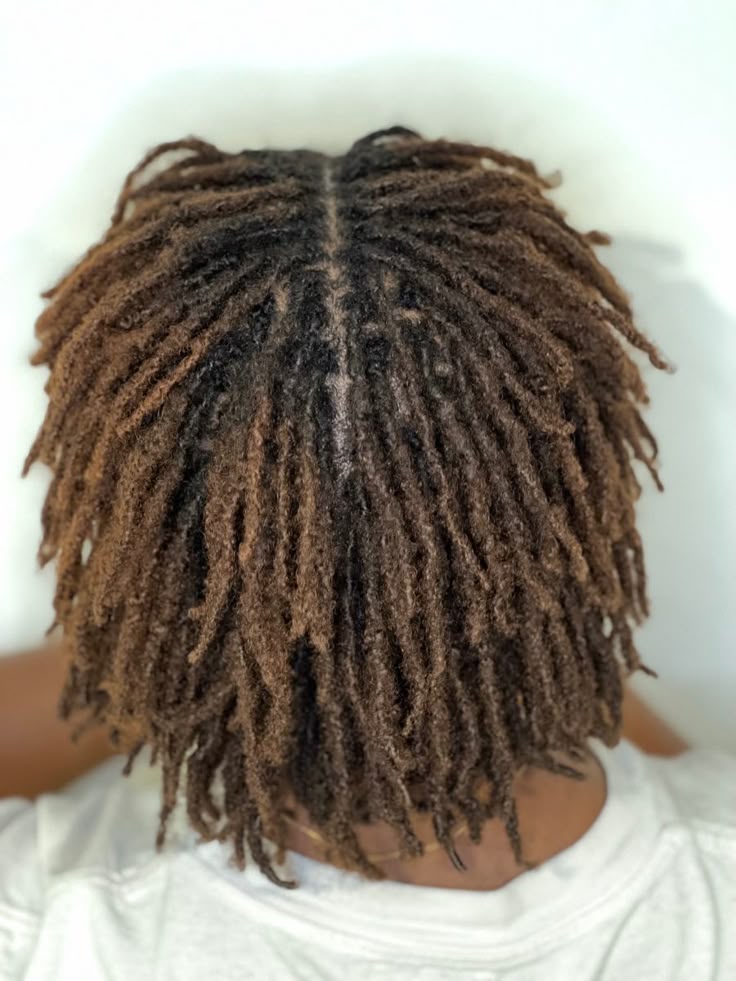
While there isn’t an official “minimum,” many people follow a general guideline when deciding whether their hair is ready. Hair is often categorized into short, medium, and long lengths to help determine what starter methods may work best and what kind of experience to expect during the early stages.
Short hair can still be loc’d, but it may require more careful handling and patience. Medium-length hair tends to be the most flexible and manageable starting point, while longer hair often makes the process smoother and more visually defined from the beginning.
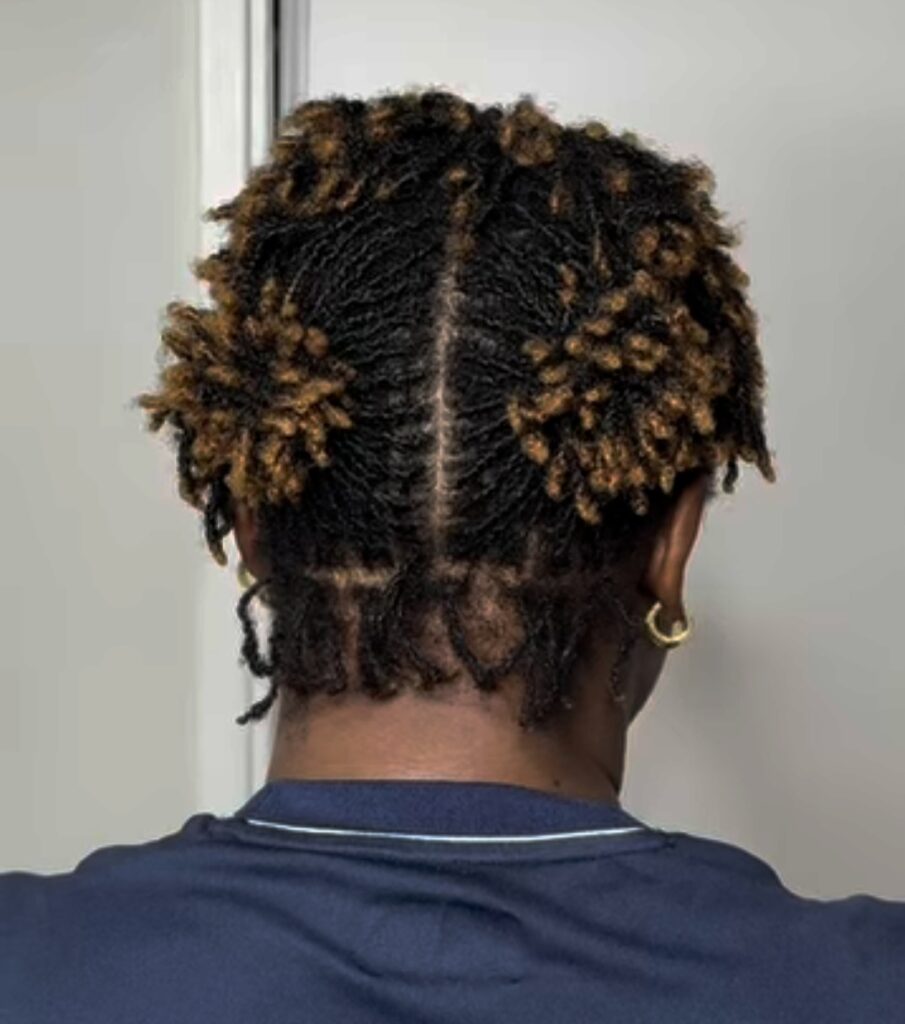
One of the key reasons locs can still form on short hair is because locing is a natural matting and tangling process. As long as the hair is long enough to be sectioned and manipulated into a starter method, it can begin to lock over time. With consistency, proper maintenance, and the right technique, even shorter strands will gradually interlock and develop into mature locs.
Ideal Hair Length for Starting Locs (By Inches)
You can’t truly answer how long should your hair be before starting locs without knowing your hair length in inches. Understanding your exact length helps you choose the most suitable starter method and set realistic expectations for your loc journey.
Short Hair (2–3 inches)
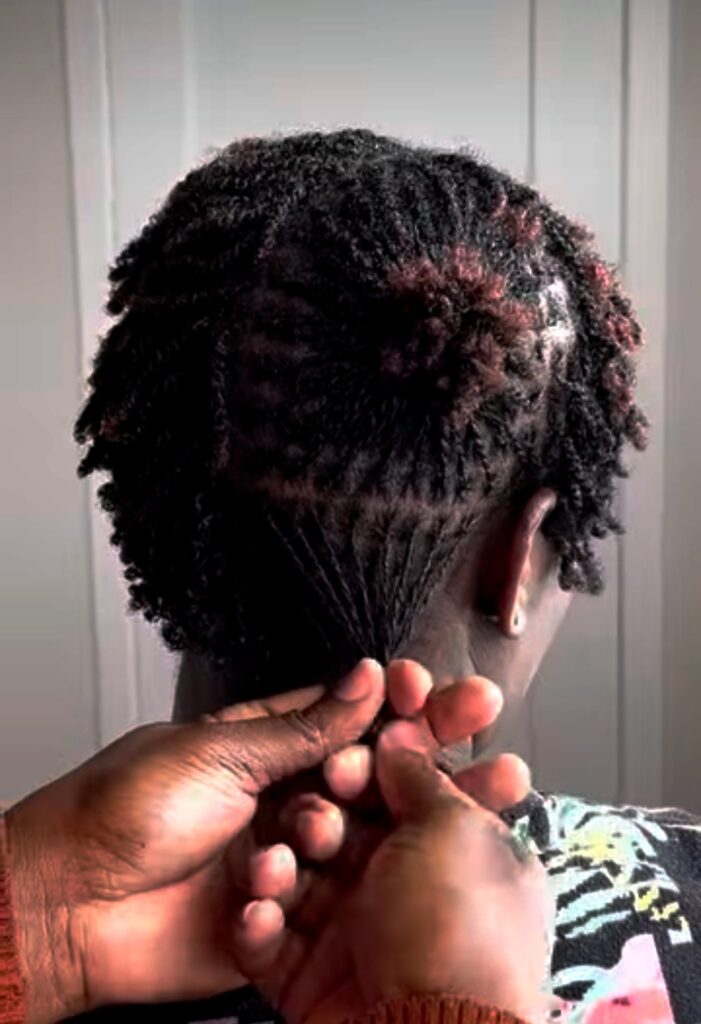
Short hair can absolutely be used to start locs, though it typically requires more patience and care during the early stages. At this length, your hair is just long enough to be sectioned and formed into starter locs using methods that help hold the strands together.
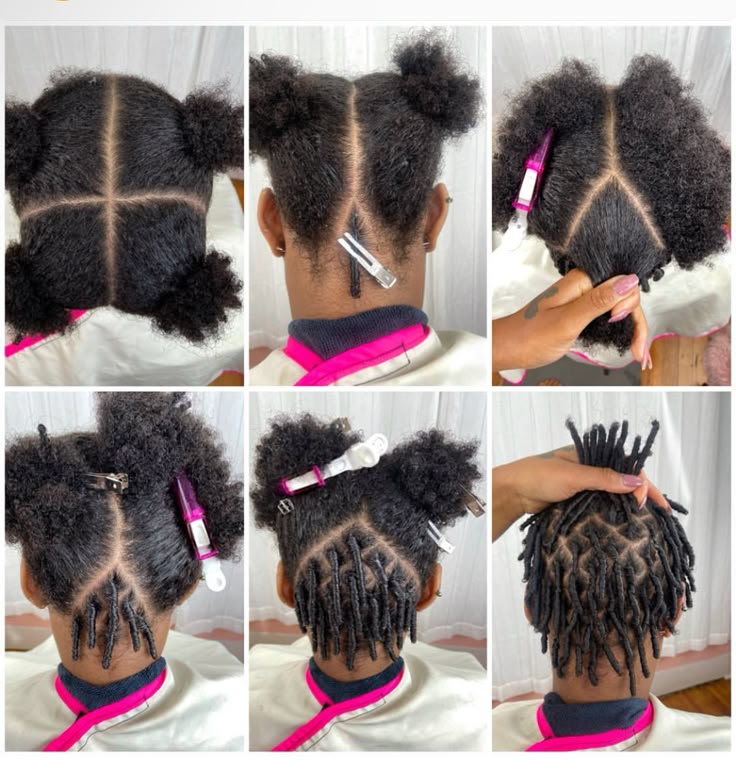
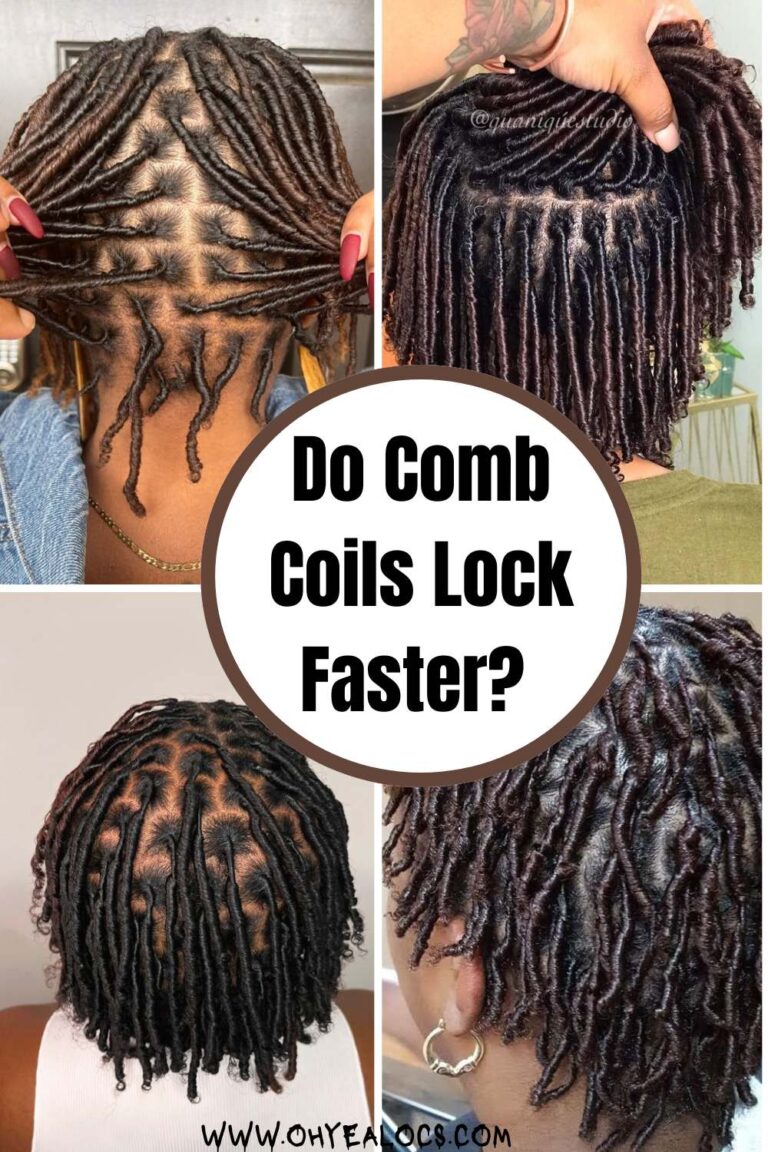
Common techniques that work well for short hair include comb coils and interlocking. These methods help secure the hair so it doesn’t easily unravel as the locing process begins.
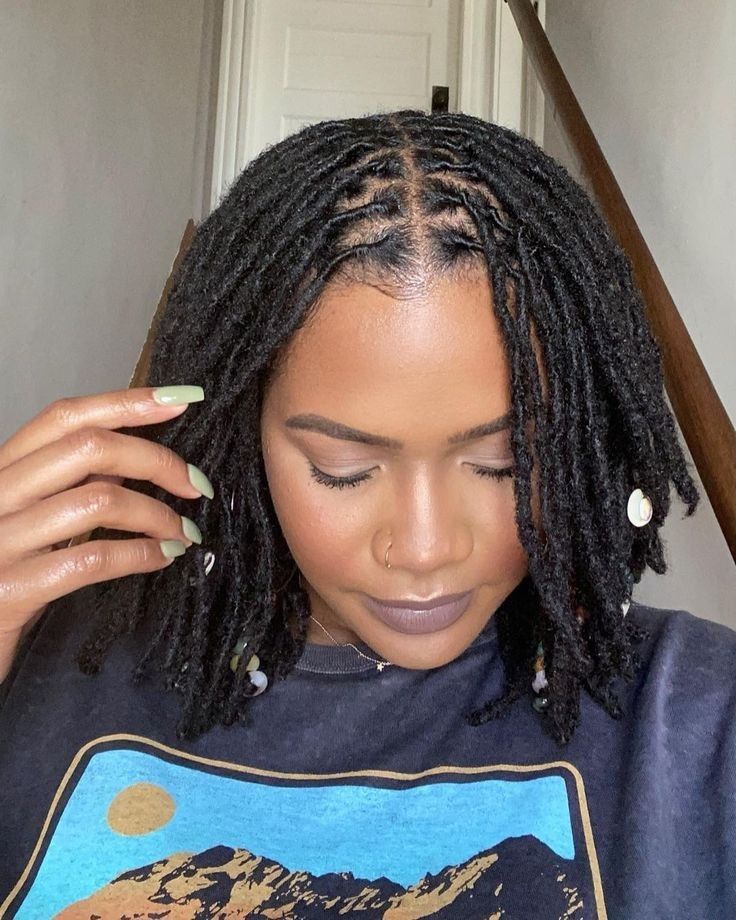
However, there are some challenges to be aware of. Short locs may unravel more easily, especially if not properly maintained. You may also notice that your hair shrinks significantly once it begins to loc, which is completely normal. Because of this, short locs often require more frequent maintenance appointments or at-home care in the beginning stages.
Despite these challenges, starting locs with short hair allows you to begin your journey earlier rather than waiting for more length. Over time, your locs will grow, mature, and become more defined.
You may like this: Starter Sisterlocks: What to Expect in the First 6 Months
Medium Hair (4–6 inches)
Medium-length hair is often considered one of the most ideal starting points for locs. At this length, your hair is long enough to provide a strong foundation while still being manageable and easy to work with.
With 4–6 inches of hair, you’ll find that sectioning is more precise, and starter styles tend to hold better compared to shorter hair. This length also offers more versatility in choosing starter methods such as two-strand twists, braids, or comb coils.
Another advantage of medium-length hair is that it typically results in a smoother loc formation process. Your locs are less likely to unravel, and they may appear more defined from the start. Additionally, styling options during the early stages are more accessible, allowing you to experiment with different looks while your locs mature. It provides a balanced starting point with fewer complications and a more predictable loc journey.
Long Hair (6+ inches)

Long hair offers the most flexibility when starting locs. With 6 inches or more, your hair is easier to section, manipulate, and maintain during the starter phase.
At this length, starter locs tend to look fuller and more defined right from the beginning. The added length helps the hair stay in place, reducing the likelihood of unraveling and making it easier to achieve clean, uniform sections.
Long hair also allows for a wider range of starter methods, and styling options are more abundant even in the early stages of loc formation. Because the hair is already longer, the visual progression of your loc journey may appear faster compared to shorter hair.
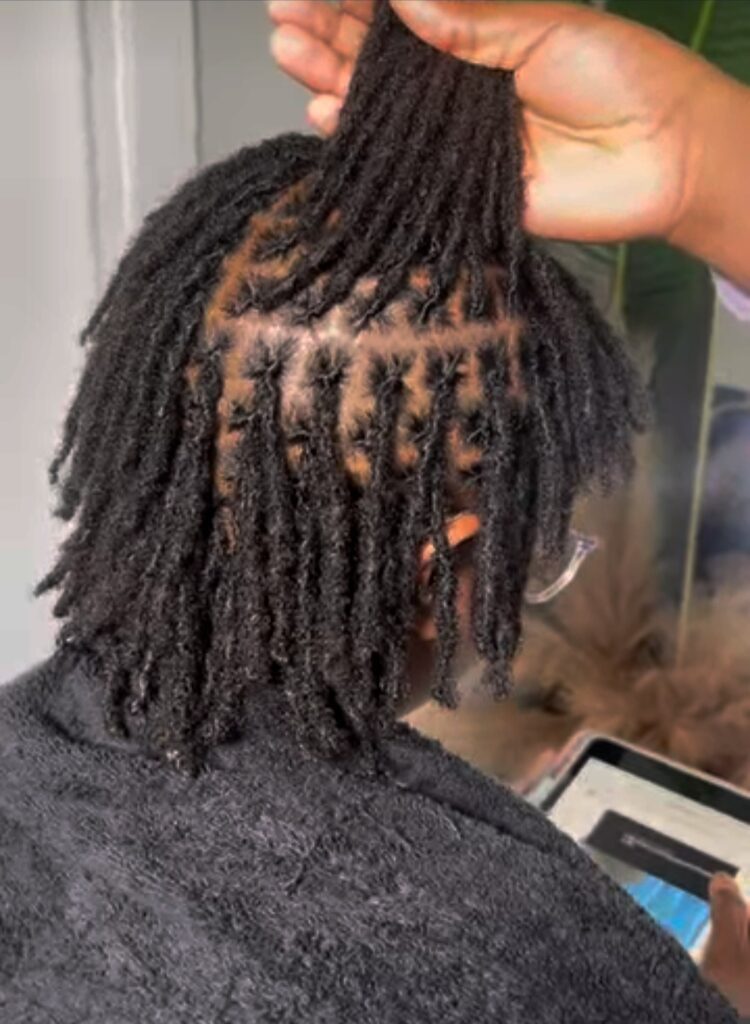
However, one thing to keep in mind is that longer hair may require more effort during sectioning and initial installation. Additionally, as your locs mature, they will become heavier due to the added length and thickness.
Despite this, long hair generally provides the smoothest transition into locs and the most immediate visual results.
Starter Loc Methods and Length Requirements
There are different methods of starting locs, but choosing the right starter method is just as important as your hair length when beginning locs. Different techniques work better for certain hair lengths, textures, and lifestyles, and understanding these differences can help you avoid frustration and set realistic expectations from the start.
Below are the most common starter loc methods and how they relate to hair length.
Two-Strand Twists

Two-strand twists are one of the most popular starter methods, especially for people with medium to long hair. This method involves dividing the hair into sections and twisting two strands around each other to create the base of each loc. It is best for medium to long hair (typically 4 inches and above). Two-strand twists are ideal if you want a versatile, natural-looking starter loc style with good long-term structure.
Comb Coils
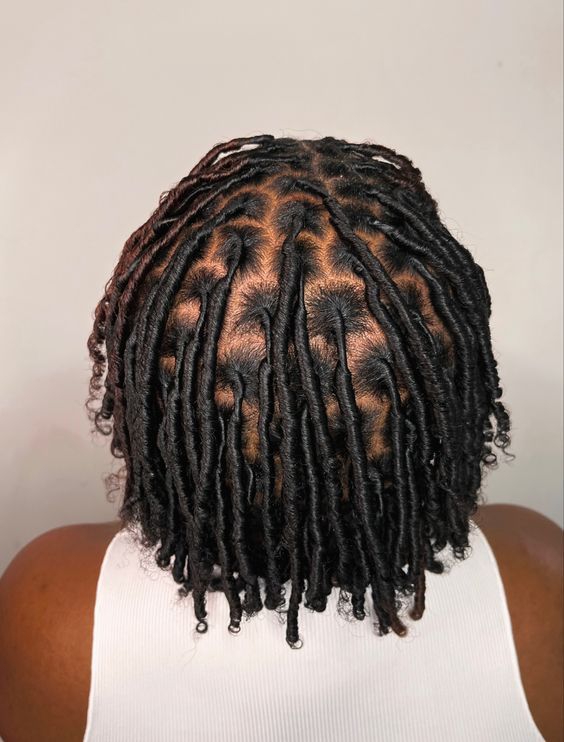
Comb coils are created by using a fine-tooth comb to twist small sections of hair into tight coils. This method is especially common for shorter hair and tighter curl patterns. It is best for short to medium hair (around 2–5 inches). They are often recommended for beginners with shorter hair who want a structured and clean starting point.
Braids
Braids (also known as plaits) are another effective starter method that works by braiding sections of hair to form the base of the locs. It is best for medium to long hair (4 inches and above). Braids provide a strong, secure base and can transition into locs as the hair matures. It requires patience as the hair gradually mats and forms locs. Braids are a great option if you want a more structured start with reduced risk of unraveling.
Interlocking / Instant Locs
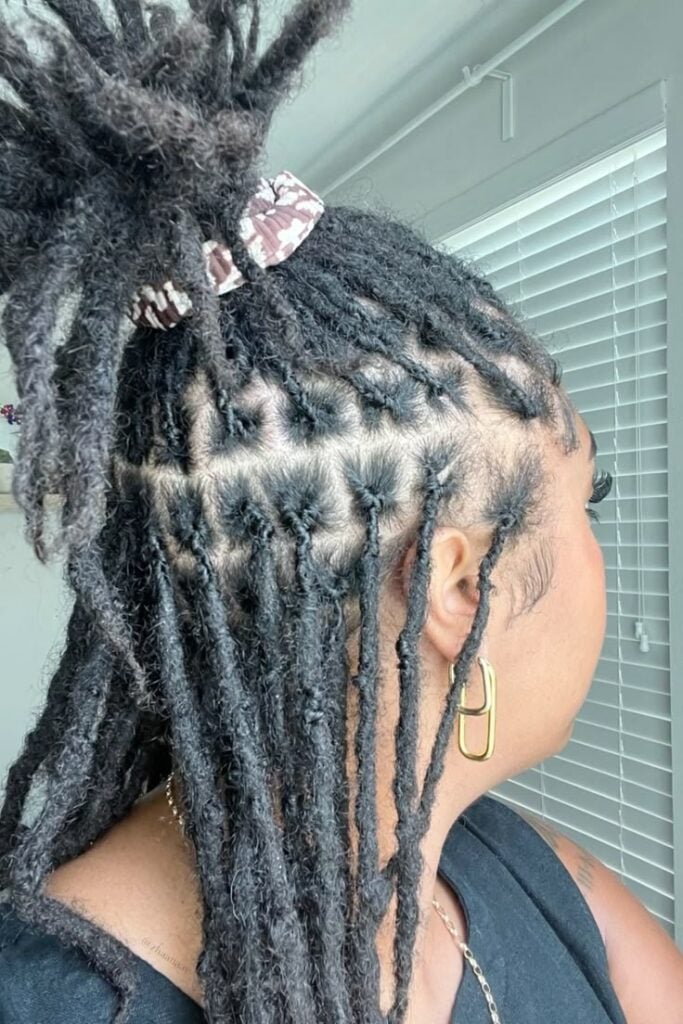
Interlocking, sometimes referred to as instant locs, involves using a tool or technique to pull the hair through itself at the root, creating a locked structure immediately. It is best for short to medium hair (can work even with very short lengths). It provides immediate locking at the roots and reduces the chances of unraveling. It requires proper technique or professional assistance.
Why Method Choice Matters as Much as Length
Hair length is important, but it does not work alone. The starter method you choose can significantly influence how well your locs form, how they look in the early stages, and how manageable they are over time. Short hair may not hold well in two-strand twists, but can work effectively with comb coils or interlocking. Medium hair can handle multiple methods, offering more flexibility. Long hair can adapt to almost any starter method with ease.
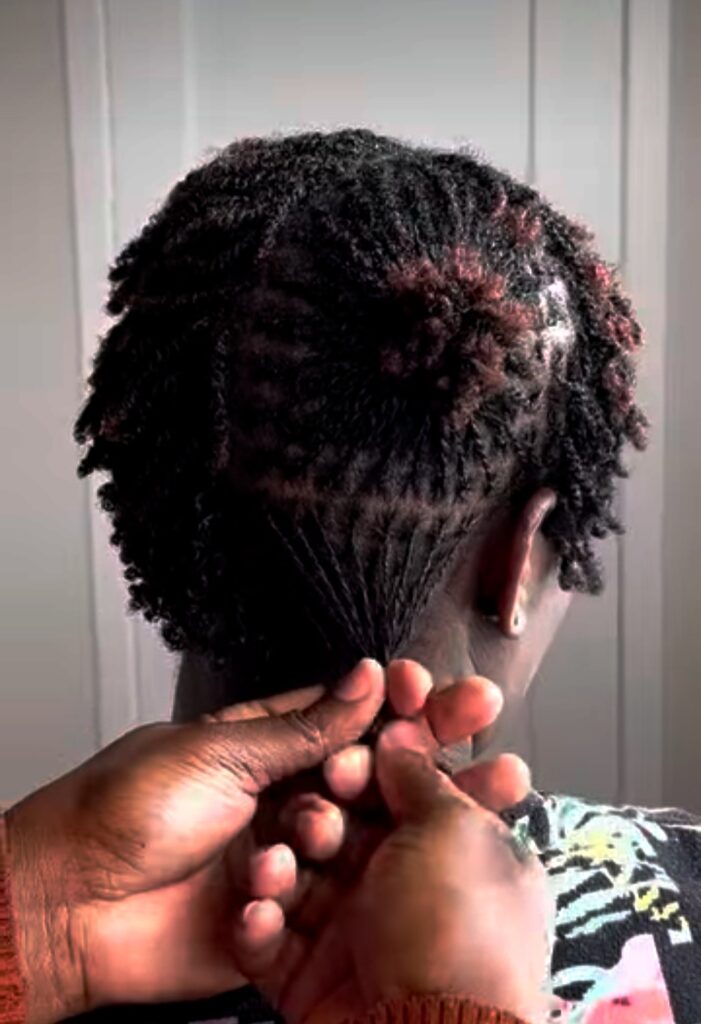
Choosing the wrong method for your hair length may lead to issues such as tangling, inconsistent loc formation, or increased maintenance needs. On the other hand, selecting the right method helps your locs develop properly from the beginning and reduces stress during the early stages.
Can You Start Locs with Very Short Hair?
Yes, you can start locs with very short hair, but there are a few important considerations to keep in mind. “Very short hair” typically refers to hair that is around 1 to 2 inches or slightly above. At this length, the hair is just long enough to be sectioned and manipulated, but it may require extra care during the starter phase.
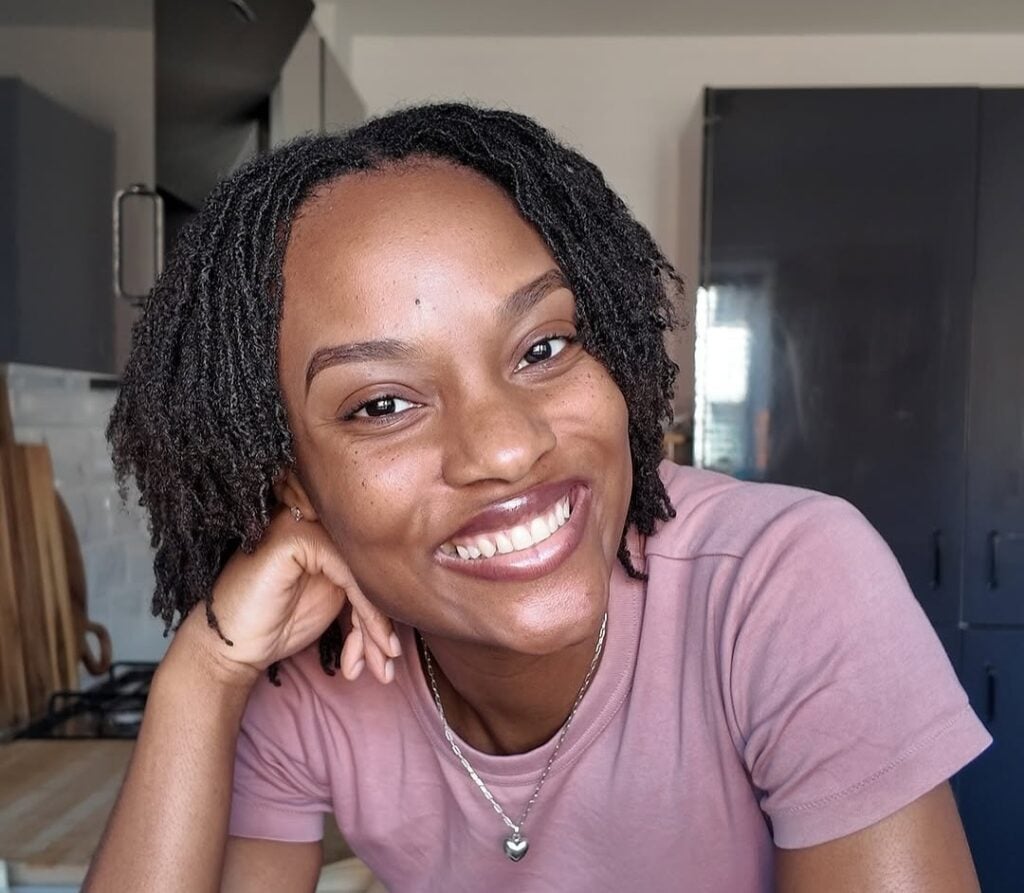
With the right method, such as comb coils or interlocking, even very short hair can begin the locing process. However, expectations should be realistic, as the journey may look slightly different compared to starting with longer hair.
You’ll love this too: How to Start Locs on Short Hair (Step-by-Step Beginner Guide)
What to Expect When Starting Locs with Very Short Hair
Starting locs with very short hair comes with unique characteristics that are completely normal in the early stages.
Shrinkage
One of the first things you’ll notice is shrinkage. As your hair begins to loc and coil, it will appear shorter than its actual length. This happens because the strands tighten and contract as they begin to mat together. Shrinkage is a natural part of the loc process and is especially noticeable with shorter hair.
Possible TANGLING
Very short hair may not hold starter styles as firmly as longer hair. As a result, some locs may tangle during washing or styling, especially in the early weeks. This is not a failure; it’s part of the locking process. With consistent maintenance and proper technique, the hair will gradually begin to hold its structure more securely over time.
More Frequent Maintenance
Because very short hair is less anchored, it often requires more frequent maintenance. This may include: regular retwisting or palm rolling, careful washing techniques, and periodic tightening or re-coiling. Staying consistent during this stage helps your locs form properly and reduces the chances of uneven development.
Despite these considerations, starting locs with very short hair is absolutely possible and can be a great way to begin your loc journey early. With patience, proper care, and the right method, your hair will gradually mature into well-formed locs over time.
Patience and Commitment
One of the biggest factors that determines how successful your loc journey will be is your level of patience and commitment. Locs don’t form overnight, they go through stages, and each stage requires time, care, and consistency.
Some people seem to have an “easier” loc journey, while others struggle with unraveling, frizz, or slow progress. In most cases, the difference is not just hair length – it’s consistency. If you go into your loc journey expecting instant perfection, you may feel frustrated. But if you understand that locs take time to develop and you stay committed to caring for your hair properly, the process becomes much smoother.
Take a look at this: Are Microlocs Worth It? Pros, Cons & Who Should Avoid Them
Signs Your Hair Is Ready for Locs
Before starting locs, it’s important to know whether your hair is truly ready. This goes beyond just length, it’s about the overall condition of your hair and your readiness to commit to the process. Here are a few key signs that your hair is ready for locs:
Hair is at least a few inches long: While there’s no strict rule, having at least 2–3 inches of hair makes it easier to section and apply most starter methods.
Healthy scalp: A clean, balanced scalp is essential. If you’re dealing with issues like dandruff, irritation, or buildup, it’s best to address them before starting locs.
Minimal breakage: Your hair should be relatively strong and not breaking excessively. Weak or damaged hair can affect how well your locs form and hold over time.
You understand the maintenance required: Locs require care, especially in the early stages. Being prepared for regular maintenance, gentle handling, and patience is a strong sign that you’re ready to begin. When these factors are in place, you’re setting yourself up for a smoother and more successful loc journey.
Continue your journey here: How Long Should Your Hair Be Before Starting Locs
What Happens If You Start Locs Too Early?
Starting locs early isn’t necessarily a bad thing, but it can come with a few challenges, especially if your hair is very short or not in the best condition.
Some common issues include:
Slipping locs
When hair is too short, it may not hold the starter style properly, causing sections to loosen or unravel.
Uneven sections
Short hair can make it harder to create clean, consistent parts, which may affect how uniform your locs look later.
Frequent retwisting needs
You may need to maintain your locs more often to keep them neat and secure during the early stages.
That said, these challenges are manageable. With the right technique, proper care, and consistency, your locs will gradually form and strengthen over time.
The key is knowing what to expect so you don’t get discouraged along the way.
Should You Wait for Your Hair to Grow Longer?
Deciding whether to wait or start now depends on your personal preference, lifestyle, and patience level. There are benefits to both options.
Pros of Waiting
- Easier styling from the beginning
- Cleaner sections and more defined parts
- Fewer issues with unraveling
- Lower maintenance in the early stages
Pros of Starting Early
- You begin your loc journey sooner
- Your locs grow and mature over a longer period
- You gain experience with maintenance early on
- You don’t delay your progress waiting for “perfect” length
There’s no right or wrong choice here. Some people prefer to wait for convenience, while others are excited to start right away and embrace the full journey from the beginning.
Here’s something similar you’ll love: Everything You Need to Know Before Starting Your Loc Journey
Tips to Grow Your Hair Before Starting Locs
If you decide to wait and grow your hair a bit longer before starting locs, focusing on healthy growth is key.
Protective styles: Styles like braids or twists help protect your hair from breakage and allow it to grow with less manipulation.
Moisturizing routine: Keeping your hair hydrated prevents dryness and breakage, which supports steady growth.
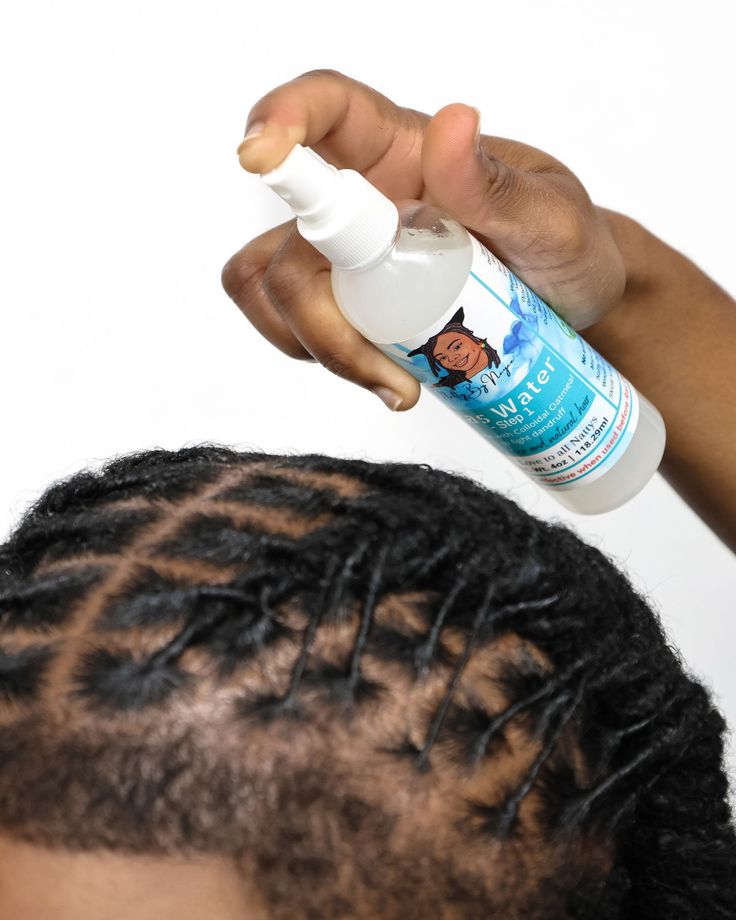
Scalp care: A healthy scalp creates the right environment for hair growth. Keep it clean, nourished, and free from buildup.
Healthy diet and consistency: What you eat also plays a role in hair health. Staying consistent with your routine both internally and externally, helps promote stronger, healthier hair over time.
In conclusion, remember that growth doesn’t happen overnight. Consistency is what brings results. Instead of focusing only on length, it’s more important to consider your hair’s health, your chosen starter method, and your willingness to stay consistent throughout the process.
Locs are a journey that evolves over time, and everyone’s experience is different. What matters most is starting when you feel ready, not when everything feels perfect. Focus on healthy hair, choose the right technique for your length, and trust the process.
You ight like to read more here: 15 ways to maintain your Locs in Winter
2 Comments