How Big Should Your Starter Locs Be?
Disclosure: Some of the links in this post are affiliate links. This means if you click on the link and purchase an item, I will receive an affiliate commission at no extra cost to you. All opinions remain my own. I only recommend products or services I believe will add value to my readers.
Choosing the right size for your starter locs is one of the most important decisions you will make at the beginning of your loc journey. It may seem trivial, but the loc size you start with will determine how your locs look, feel, and function in the long run.
From styling options to maintenance routines, everything is influenced by this one choice. That’s why it’s important to get it right from the beginning.

If you are asking, “How big should my starter locs be?” The honest answer is this: it depends. Your hair type, lifestyle, personal preferences, and long-term goals all play a role.
Starter locs are the foundation of your entire loc journey. Even though the sizes you begin with will evolve, it rarely strays far from its original structure. This is why taking time to decide on the right size is non-negotiable.
Many beginners rush through this stage. Some choose their loc sizes based on trends or what they see on others, not knowing that what works for someone else may not work for them. Your hair is unique, and your locs should reflect that.
Save this: Micro locs vs Traditional locs: Which is right for you?
In this article, we will break down the different loc sizes, what should influence your decision, and how to choose a size that aligns with your lifestyle and vision.
Let’s get right in!
What Are Starter Locs?
Starter locs are the initial phase of loc formation. At this stage, the hair is sectioned and styled in a way that encourages it to gradually mat and lock over time.
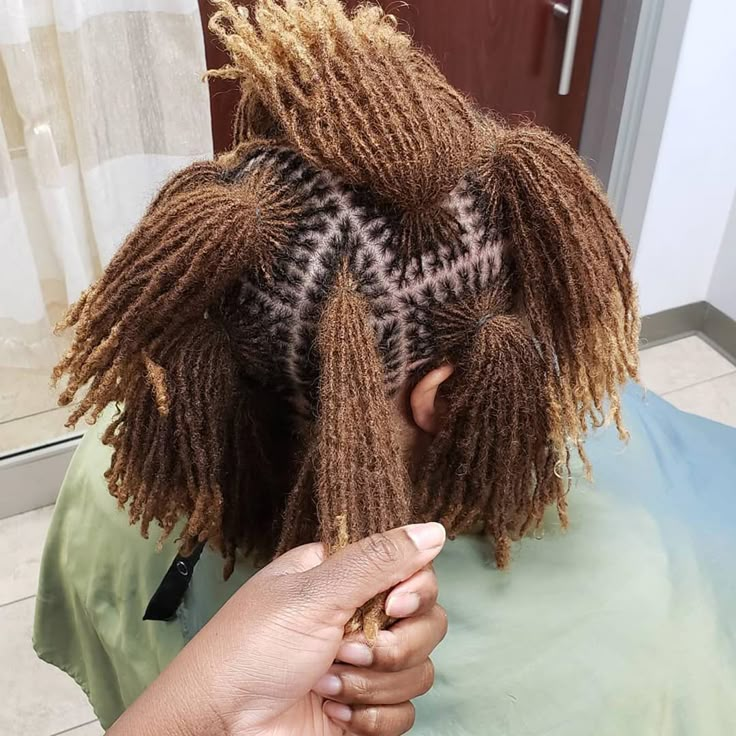
Different methods used to start locs include: Two-strand twists, finger coils, braids and interlocking.
Se this guide: Different methods of starting locs
Even though each method affects how quickly your hair locks, the size of your sections ultimately determines the size of your mature locs.
However, it is important to understand that your starter loc size is not temporary. The size you begin with only sets the blueprint for your final look. Your loc could get thicker or thinner along the way, depending on your hair type and maintenance.
Choosing the right size ensures that your locs develop within the boundary you have set for them.
Read this guide: Microlocs vs Sisterlocs: Size, differences, cost explained
Why Starter Loc Size Matters
The size of your starter locs affects more than just appearance. It influences your entire experience.
First, it determines the thickness of your mature locs. Smaller sections result in smaller locs, while larger sections produce thicker locs.
Bookmark this: Starter locs method that last the longest
Also, it affects styling versatility. Smaller locs give room for more intricate styles, while larger locs offer a bold, simple look.
Another thing is that your starter loc size determines maintenance. Smaller locs often require more time and care, while larger locs are generally easier to manage.
Lastly, the size you settle for shapes the overall fullness of your hair. If you desire a dense, full look, smaller locs may be the better option. If you prefer a more spaced-out, defined appearance, larger locs might suit you.
What Are the Different Starter Loc Sizes?
Understanding the three main categories of loc sizes will help you make a more informed decision. While the differences may seem subtle at first, each size category comes with its own unique look, maintenance needs, and long-term results.
Taking the time to understand these options will not only help you choose what suits your personal style, but also what fits your lifestyle and hair goals. Let’s take a closer look at them:
– Small (Microlocs)
Microlocs are very small, often created with tiny, precise sections. They can resemble loose natural hair from a distance, and they also give a fuller appearance.
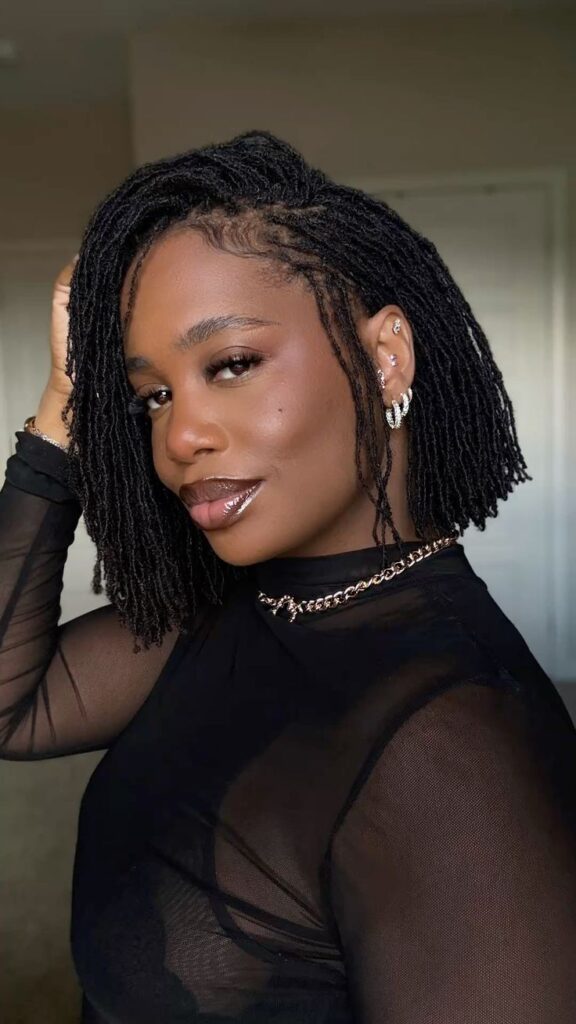
However, they require patience and commitment as installation can take many hours and may require frequent maintenance.
Microlocs are good for you if you want high styling flexibility, fuller-looking hair, and detailed and intricate styling.
As beautiful as microlocs are, they might not be a good fit for you if you don’t have enough time to spare for maintenance or you are on a low budget.
Come back to this: Best starter locs method for soft hair
– Medium Locs
Medium-sized locs are the balance between small and large locs. They are one of the most popular choices for beginners because they are easy to manage and are versatile. They are not too time-consuming to maintain and also can be styled in various ways.
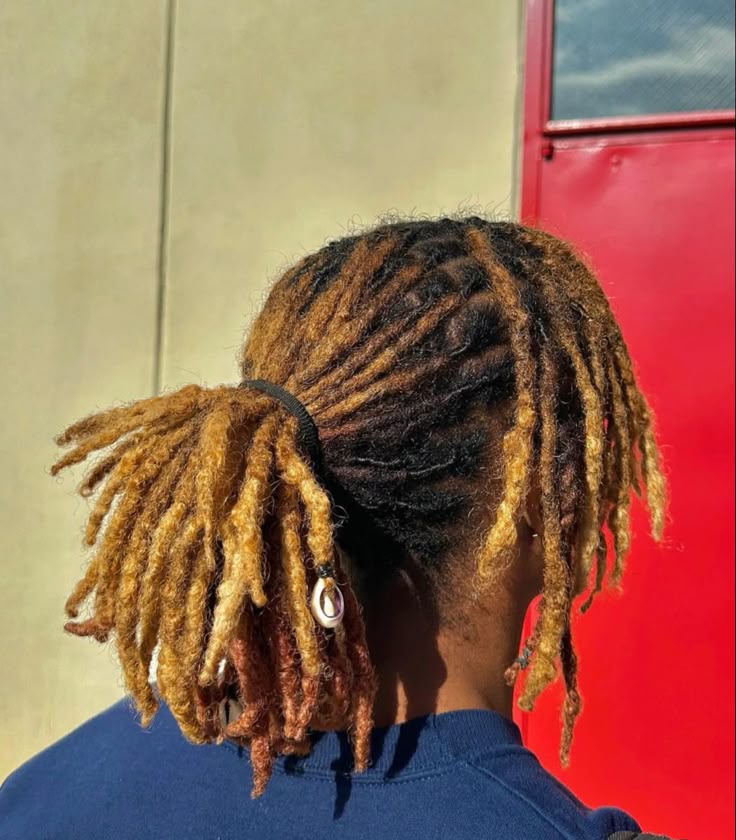
Medium locs can be a good fit if you are seeking a balanced look, moderate maintenance and everyday practicality.
However, they may not be as versatile as microlocs, but they are easier to manage long-term.
Save this for later: Worst starter locs method for beginners
– Large Locs
Large locs are created using bigger sections to form thicker and more prominent locs. They are bold, easy to maintain, and quicker to install. If you prefer a simple routine and a striking look, large locs may be ideal.
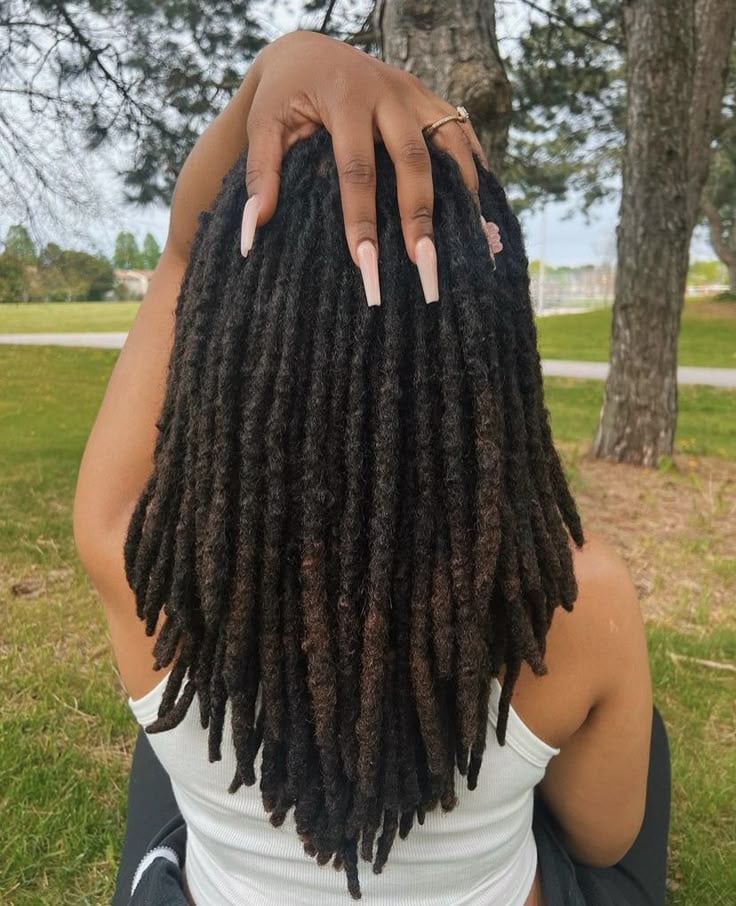
They are most suitable if you prefer a low-maintenance lifestyle, bold, defined appearance, and faster installation process.
Also, large locs tend to mature faster and can appear fuller earlier in your loc journey. They also place less tension on the scalp since fewer parts are created.
However, because each loc is bigger, they can feel heavier over time and may be less flexible when it comes to intricate styles.
Factors to Consider When Choosing Starter Loc Size
Before you decide, take a moment to consider these important factors:
• Hair Density (Thick vs Fine Hair)
If you have thick hair, you can comfortably choose smaller locs without compromising fullness. On the other hand, if your hair is fine, very small locs may appear sparse.
Your hair density plays a major role in how your locs will look over time.
This guide will help you: How to prepare your hair before locking
• Hair Texture (Coarse, Soft, Loosely Coiled)
Coarse hair tends to lock faster and holds structure well, making it suitable for various sizes. Softer or looser textures may take longer to lock, especially in larger sections.
This means if your hair is loosely coiled, smaller sections may help encourage quicker locking.
• Desired Final Look
Ask yourself: what do I want my locs to look like in the long run? Do you want:
a full, voluminous look? A neat, uniform appearance? Or thick, statement locs? Your answer will determine the size you go for.
• Lifestyle & Maintenance Commitment
Be honest about how much time and effort you are willing to invest. All Locs don’t require the same level of care; smaller locs require more maintenance than larger locs which are easier to manage. Medium locs, on the other hand, offer a balanced routine.
• Your Budget
Many beginners often forget to factor in their budget at the starter stage, only to get frustrated along the line. To avoid unnecessary stress, decide if you would visit a loctician regularly or DIY.
• Styling Preferences
If you enjoy switching up your hairstyle frequently, smaller locs will give you more options. If you prefer a consistent, simple look, larger locs may suit you better.
How to Decide the Right Size for You
Choosing the right size becomes easier when you ask yourself these honest questions:
– How much time can I realistically dedicate to my hair?
–Do I prefer versatility or simplicity?
–What look do I want to achieve long-term?
It’s helpful to also visualise your mature locs, not just the starter phase. What kind of locs do you see in the next few years? Locs are a long-term investment, hence the need to see beyond the now.
If possible, consult a professional loctician. They can assess your hair type and recommend a size that will work best for you.
Common Mistakes to Avoid
One of the biggest mistakes loc starters make is choosing a size based on trends, forgetting that trends are temporary. What looks good today may not suit your lifestyle tomorrow.
Must read: Starter locs mistakes that ruin your locs journey
Another mistake is ignoring your natural hair type. Your texture and density should always guide your decision.
Some people also choose extremely small or large sizes because they are appealing – without considering maintenance. This often leads to frustration later on.
Lastly, avoid expecting instant results. Locs take time to form and mature. You would need a lot of patience to succeed in this journey.
Keep this page open: 23 things you should ever do to your starter locs
Can You Change Your Loc Size Later?
Yes, but with limitations. You can combine smaller locs to create thicker ones. This is a relatively simple process. However, splitting larger locs into smaller ones is more difficult and may cause uneven results.
This is why it’s better to choose carefully from the beginning. Think long-term, not just about how your starter locs look today.
Expert Tips for Perfect Starter Locs
Here’s what many experts advise: start slightly smaller than your desired final size. You know why? Locs tend to expand as they mature.
As important as choosing the right starter size is, they don’t solely determine your locs’ success. Keep your scalp clean and healthy. A good routine supports better locking and growth than sizes do.
You might need this: Best parting patterns for locs
Also, be mentally prepared to face any challenges you might encounter as you go through your loc journey. Your hair will go through stages, and each stage is important for the next to unfold.
By all means, avoid comparing your journey to others. Your hair is unique, and so will your result. No two heads of Locs are totally the same. Appreciate what you have and make the best of it.
Learn more here: 10 things you should never do to your starter locs
Final Thoughts
So how big should your starter locs be? As you have seen, there is no one-size-fits-all answer to that question – and that is the beauty of it. Variety, they say, is the spice of life.
Because your loc journey is unique, the size you choose should reflect not just your aesthetic preferences, but your lifestyle, and your long-term vision. Rather than chasing perfection, focus on alignment.
Let there be a sync between your expectations and your reality, what you admire and what you can maintain. When those factors align, your loc journey becomes not just easier, but more enjoyable.
Remember that growing locs is a journey that requires some level of commitment and patience. There will be moments of doubt, especially in the early stages, but trust the foundation you have set.
So give your locs time to evolve, and yourself, the grace to learn along the way. And most importantly, embrace your journey for what it is – and not some sort of fantasy.
Frequently Asked Questions
1. How many starter locs should I have?
The number of starter locs depends on your chosen size and hair density. Smaller locs can range from 150 to 300+, while medium locs may fall between 80 and 150, and larger locs can be fewer than 80.
2. Do starter locs look thinner at the beginning?
Yes, starter locs often appear thinner and less defined at first. As they mature and begin to lock, they typically swell and take on a fuller appearance.
3. Will my starter locs shrink over time?
Yes, shrinkage is a normal part of the locking process. Your locs may appear shorter as they tighten and mature, especially if you have tightly coiled hair.
4. Does the parting pattern affect loc size?
While the parting pattern (square, triangular, freeform) mainly affects the overall look and styling, it can slightly influence how your locs lay and appear in terms of fullness.
5. Can I start locs on chemically treated or relaxed hair?
It is possible, but not ideal. Locs form best on natural hair. If your hair is relaxed, you may need to transition and cut off the processed ends over time.
6. How often should I retwist or maintain starter locs?
Maintenance frequency varies, but many people retwist every 4–6 weeks. Avoid over-manipulation to prevent your locs from thinning or breaking.
7. Will my locs all turn out the same size?
Not always. Even with precise sectioning, slight variations can occur due to differences in hair density, growth patterns, and maintenance habits.
8. Do starter locs itch or feel uncomfortable?
Some people experience mild itching in the early stages, especially as the scalp adjusts. Keeping your scalp clean and moisturised can help reduce discomfort.
9. Can I colour my hair before or after starting locs?
You can colour your hair, but it is best to do so carefully. Applying hair dye to starter locs could damage your hair or delay the locking process, depending on your hair type.
10. How long does it take for starter locs to fully mature?
Loc maturation can take anywhere from 6 months to 2 years or more, depending on your hair type, maintenance routine, and lifestyle.
2 Comments