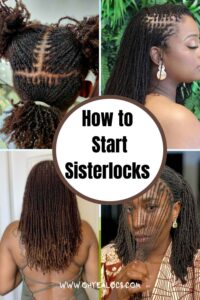
Starter Sisterlocks: What to Expect in the First 6 Months
Disclosure: Some of the links in this post are affiliate links. This means if you click on the link and purchase an item, I will receive an affiliate commission at no extra cost to you. All opinions remain my own. I only recommend products or services I believe will add value to my readers.

Starting your Sisterlocks is more than just making a decision or just installing a hairstyle, it’s committing to a journey that unfolds gradually, intentionally, and uniquely for each person. While Sisterlocks are often praised for their versatility, light weight, and natural appearance, the early months can feel confusing and overwhelming if you don’t know what to expect.
Many beginners step into the Sisterlocks journey with unrealistic expectations. These expectations can range from wanting instant maturity, permanent neatness, or rapid length retention. When frizz appears, shrinkage sets in, or the locs begin to behave unpredictably, panic often follows. This is why it is important you read and understand what to expect in the first 6 months of your starter Sisterlocks journey. It is an essential knowledge you need, so that when that time comes, it won’t look surprising.
You need this guide: How to Start Sisterlocks on Natural Hair (Beginner-Friendly Guide)
In this detailed guide, you’ll learn exactly how Sisterlocks evolve month by month, what changes are normal, what mistakes to avoid, and how to support your locs through the most delicate phase of the journey. Whether you’ve just installed your Sisterlocks or you’re still researching, this post will help you approach your starter phase with patience, confidence, and clarity.
Understanding Starter Sisterlocks and Why the First 6 Months Matter

When we say starter Sisterlocks, we refer to the initial phase immediately after installation, when the hair is interlocked but not yet locked. This means that the installation has happened but the hair has not yet turned into the locs that we know of. During this period, the strands are learning to form a stable structure while adjusting to minimal manipulation, new growth patterns, and consistent maintenance.
The first six months are critical because:
The foundation of each loc is formed
Hair behaviour and locking direction are established
Maintenance habits are created
Early damage (or care) determines long-term loc health
Mistakes made during this phase of your sisterlocks journey such as over-retightening, product overload, or excessive styling — can lead to thinning, breakage, or weakened locs later. Starter Sisterlocks are not fragile, but they are easily affected by heavy styling and rough handling.
Pin this: What Are Sisterlocks? Everything Beginners Need to Know
Month 1: The Installation Aftermath and Adjustment Phase

The first month after installing starter Sisterlocks is usually filled with excitement. Your hair looks neat, uniform, and incredibly light. However, beneath that neat appearance, very little locking has actually happened.
What to Expect in Month 1 of Starter Sisterlocks
Extremely lightweight locs
A very thin appearance
Minimal swelling
Visible grid pattern at the scalp. The installation is done using a grid pattern and a special tool. so, at this stage, the grid pattern is very much visible.
Slight scalp tenderness or sensitivity
Hair that moves freely and swings easily
At this stage, your Sisterlocks are essentially secured strands, not mature locs. This is why unraveling can still occur if the hair is excessively manipulated.
See this: What to Expect in the First 3 Months of Your Loc Journey
What to Avoid During Month 1
Heavy oils, creams, or butters
Frequent styling
Touching or twisting the locs
Tight updos or tension styles
Your main responsibility during this month is protection and restraint. The less you interfere, the better your locs respond.
Month 2: Early Frizz, Puffiness, and Root Changes
Month two is often where doubt creeps in. The beautiful and clean look from installation begins to fade, and many people fear something has gone wrong.
Common Changes in Month 2
Frizz appearing at the roots and along the locs
Locs losing their “fresh install” neatness
Roots puffing up sooner after retightening
Some locs appearing uneven in thickness
This is completely normal. Frizz is not a sign of failure rather, it’s a sign that your hair is beginning to interlock and expand naturally.
Why Frizz Is Normal in Starter Sisterlocks
Frizz occurs when loose strands start wrapping around themselves and neighbouring hairs. This process strengthens the loc over time. Attempting to eliminate frizz too early often leads to over-manipulation, thinning, or delayed locking.
Month 3: The Budding Phase Begins
By the third month of installation, many people begin to feel physical changes in their Sisterlocks. This stage is known as early budding.
Signs of Budding in Starter Sisterlocks
Small bumps or knots forming along the loc
Some sections feeling firmer than others
Reduced unraveling
Less slippage at the ends
Budding indicates that the internal structure of the loc is beginning to develop. While the hair may still look frizzy externally, significant progress is happening beneath the surface.
In the third month of sisterlocks installation, a lot of things may occur and emotion may rise. This phase tests patience. Your locs may look worse before they look better. Understanding this stage prevents unnecessary regret, panic retightening, or impulsive styling.
Read this: 10 Things You Should Never Do to Your Starter Locs
Month 4: Shrinkage, Swelling, and Texture Inconsistency
The fourth month of installation introduces changes that often surprise first-time Sisterlocks wearers, especially shrinkage.
What Happens in Month 4
Locs appear shorter than before
Swelling becomes more noticeable
Texture varies from loc to loc
Some locs mature faster than others. This is not a cause for alarm, it is absolutely normal.
Shrinkage is a positive sign. It means the hair is compacting and locking. Length loss at this stage does not equal breakage.
Why Sisterlocks Shrink Before They Grow
Once you hear that locs appear shorter than before, you may call it strange but for sisterlocks, it is normal. As hair interlocks, it contracts. Once the internal structure stabilises, length becomes more visible over time. Shrinkage now supports stronger locs later.
Month 5: Strength Development and Improved Stability

By the fifth month, your Sisterlocks begin to feel more secure. While frizz still exists, the hair behaves more predictably.
Improvements Noticed in Month 5
Locs feel firmer
Roots hold better between retightenings
Washing feels less intimidating
Less unraveling overall
Your scalp also adapts to a consistent care routine, making dryness, flaking, or irritation easier to manage.
Month 6: Early Stability, Not Full Maturity
Reaching the six-month mark is a milestone, but it’s important to set the right expectations.
What Month 6 Really Means
Locs are more stable
Structure is forming properly
Frizz is still present
Full maturity has not yet been achieved
At this point, your Sisterlocks have survived the most delicate stage. With consistent care, the journey ahead becomes smoother and more predictable.
Retightening Expectations During the First 6 Months of Sisterlocks

One of the most misunderstood aspects of starter Sisterlocks is retightening frequency. It is recommended that the retightening schedule comes every 6–8 weeks, depending on hair growth, density, and texture.
Signs You’re Retightening Too Often
Thinning roots
Persistent scalp soreness
Weak or stressed edges
Over-retightening during the starter phase can permanently weaken locs and should be avoided.
Save this: How to Maintain Your Locs Between Retightening
Washing Starter Sisterlocks: What You Should Know
Contrary to popular belief, washing starter Sisterlocks does not delay locking when done correctly.
Benefits of Washing Starter Sisterlocks
Promotes faster locking
Prevents scalp buildup
Reduces odour
Strengthens the loc structure
In washing your starter sisterlocks, always ensure:
You use a residue-free shampoo
You rinse thoroughly
Locs dry completely after washing
Clean hair locks better than dirty hair.
Learn more here: How to Care for Your Locs the Right Way
Styling Starter Sisterlocks: What’s Safe and What’s Not
During the first six months, styling should be minimal. Some safe styling options includes:
Simple ponytails (low tension)

Loose buns
Headwraps or scarves
Styles to Avoid on Starter Sisterlocks
Tight braids or twists
Heavy extensions
Frequent updos
Styles that pull at the hairline
Your locs are still starting to form. Styling should never interfere with that process.
Bookmark this styling guide: 15 Easy Ways to Style Your Locs – No Accessories Needed
Common Mistakes to Avoid in the First 6 Months of Sisterlocks
Overusing products
Comparing your journey to others
Excessive styling
Ignoring scalp health
Expecting instant maturity
Sisterlocks reward patience, not pressure.
Come back to this: Common locs problems and how to fix it
How to Support Healthy Growth During the Starter Phase

To achieve a healthy and growing starter sisterlocks, there are things we must take into consideration and do. Healthy starter Sisterlocks require:
Clean scalp practices
Water-based moisture
Minimal manipulation
Night protection with satin or silk
Consistency over perfection
Simple routines produce the strongest locs.
Recommended for you:How ro care for your locs the right way
Final Thoughts
The first six months of starter Sisterlocks are about learning, adjusting, and allowing your hair to do what it naturally does best. Frizz, shrinkage, and unevenness are not setbacks — they are milestones.
When you understand the process, you stop fighting your hair and start supporting it.
Your Sisterlocks are not late. They are simply becoming.
Read this next: Microlocs vs Sisterlocks: Differences, Cost, and Maintenance Explained
Frequently Asked Questions About Starter Sisterlocks
1. How long does the starter phase of sisterlocks last?
The starter phase typically lasts 6–12 months, depending on hair texture, maintenance, and individual hair behaviour.
2. Is frizz normal in starter Sisterlocks?
Yes. Frizz is completely normal and necessary for the locking process, especially in the early months.
3. Can starter Sisterlocks unravel?
Yes, especially within the first few months. Minimal manipulation reduces unraveling.
4. Should starter Sisterlocks be oiled?
Oil should be used sparingly and only to seal in moisture. Water-based hydration is more important than oil.
5. Can I style my starter Sisterlocks?
Light styling is okay, but tight or frequent styles should be avoided until the locs are more stable.
6. Why do my Sisterlocks look uneven?
Unevenness is common in the starter phase. Locs mature at different speeds and eventually balance out.
7. How often should starter Sisterlocks be retightened?
Starter Sisterlocks are typically retightened every 6–8 weeks. Retightening too frequently can cause thinning and scalp stress, while waiting too long may lead to matting at the roots. A balanced schedule supports healthy locking.
8. Can I wash my hair during the starter Sisterlocks phase?
Yes. Washing starter Sisterlocks is encouraged when done correctly. Clean hair locks faster and maintains scalp health. Always use a residue-free shampoo and ensure your locs dry completely after washing.
9. Do starter Sisterlocks shrink, and is that normal?
Yes, shrinkage is very normal during the starter phase. As the hair begins to interlock and compact, it may appear shorter. This is a sign of healthy locking, not breakage or damage.
10. When will my starter Sisterlocks start to look “neat” again
Neatness comes and goes during the first year. While your locs may look tidy right after installation or retightening, frizz will return as part of the locking process. Consistency and patience—not constant fixing—lead to long-term neatness