What Are Sisterlocks? Everything Beginners Need to Know
Disclosure: Some of the links in this post are affiliate links. This means if you click on the link and purchase an item, I will receive an affiliate commission at no extra cost to you. All opinions remain my own. I only recommend products or services I believe will add value to my readers.

If you have been researching locs for a while, chances are you’ve come across the term Sisterlocs more than once. Maybe you saw someone wearing neat, lightweight locs that move freely, or you heard that Sisterlocs are very versatile. Naturally, the curiosity to find out what the locs mean kicks in.
Bookmark this: Everything you need to know before starting your locs journey
But before you decide if Sisterlocs are right for you, there’s something important to understand: Sisterlocs are not just a hairstyle. They’re a commitment. A commitment to a lifestyle.
And that’s not a bad thing, if you know what you’re getting into.
So let’s slow down, break it all down, and talk honestly about Sisterlocs: everything beginners need to know. What they are, how they work, and who they’re really for.
See this next: Micro locs vs Traditional locs: which is right for you?
What Exactly Are Sisterlocks?
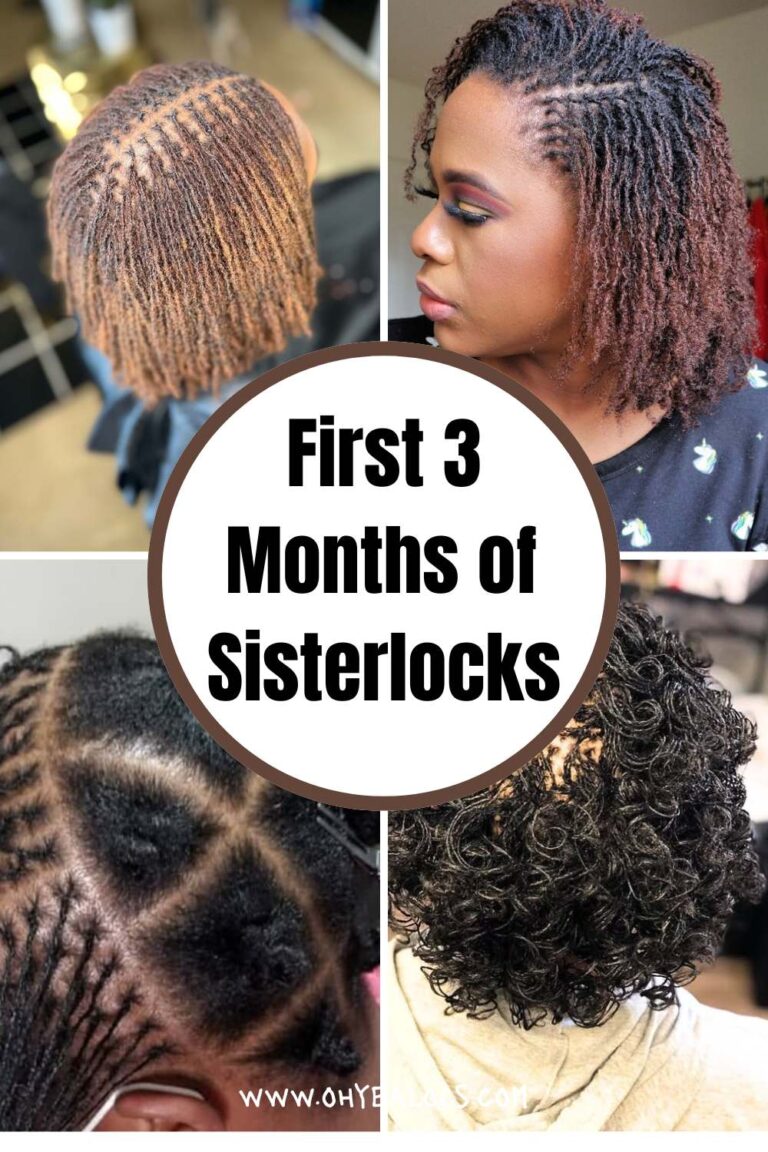
Sisterlocs are a fine, uniform loc system created for natural hair. They are much smaller than traditional locs and are often compared to micro locs but not the same with micro locs.

Instead of thick, big and chunky locs, Sisterlocs give you hundreds of small, lightweight locs that can be styled almost like loose natural hair. It can be styled as ponytails, buns, curls, updos and whichever style you prefer.
Most people end up with 250–400 locs or more, depending on hair density and the size chosen. If you love neatness and versatility, this is usually what draws people to Sisterlocs in the first place.
How did Sisterlocks Come About?
Sisterlocks were created in 1993 by Dr. JoAnne Cornwell. Her main goal for creating Sisterlocs was a very simple yet powerful one. She wanted to give black women a way to wear locs but without any extensions, chemical or heavy products, while still maintaining a well polished look.
Over the years, Sisterlocks have become very popular not just because of how they look, but because of what they represent, that is, the freedom it gives to the person wearing it, the intentionality that comes with it, and embracing natural hair as it is.
What Makes Sisterlocks Different From Other Locs?
Let’s be honest, many beginners choose Sisterlocs because they look neater than traditional locs or any other type of locs. That’s fine, however, it’s equally important to understand the limitations. At first glance, one might conclude that sisterlocs are the same as microlocs or very small traditional locs, but the difference is not just seen in the size. It goes deeper than size.
This guide will help you: Different methods of starting locs
1. Size and Uniformity
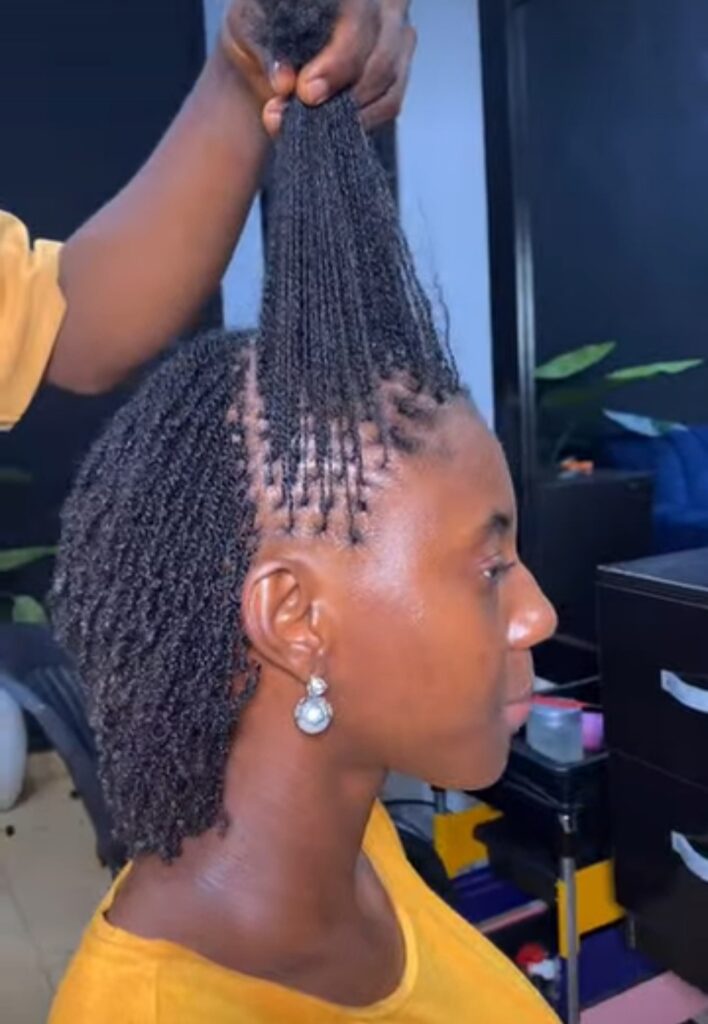
While other locs are big in size, Sisterlocks are intentionally small and evenly sized, usually between ⅛ inch and ⅜ inch wide. This gives them their signature neat appearance.
Sisterlocs are known to be smaller and lighter. This makes it very versatile for styling. Traditional locs on the other hand are chunky, thicker and fuller while microlocs are not as patterned as Sisterlocs. For it to be Sisterlocs, it must flow that grid pattern.
2. Installation pattern
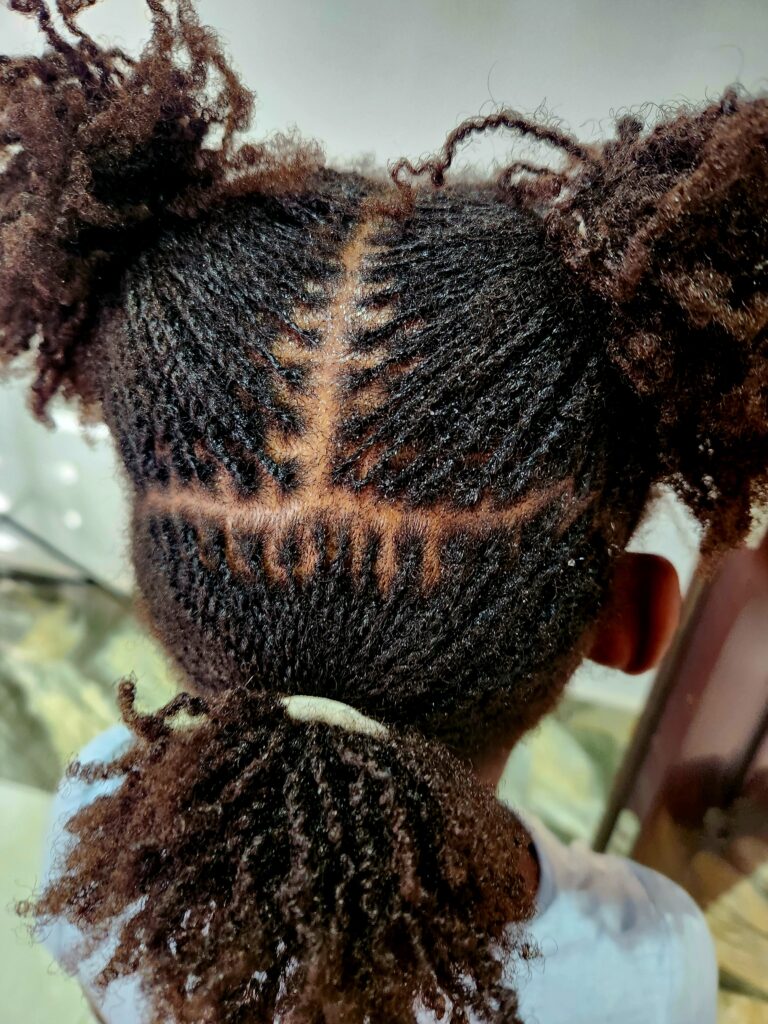
One thing that can be clearly seen from anyone on Sisterlocs is the neatness. A lot of things follow the installation of Sisterlocs and a specific grid and pattern is one of them.. Sisterlocs are installed using a patented interlocking technique and a specialised tool, unlike microlocs and traditional locs.
4. Requires professional installation
Not everyone can install, twist and retwist Sisterlocs. It requires a special interlocking tool and a patented process in which a professional does the installation.
5. Cost
While traditional locs may be cost effective and require low initial cost because it does not require so much, Sisterlocs are not cost effective. Yes, they are not. They’re expensive to install due to highly specialized, time intensive installation done by certified professionals, small parting and generally the labour involved in it.
6. Locs maintenance
While traditional locks may be flexible in maintenance, Sisterlocs require professional and regular retightening every 4-6 weeks. In essence, it requires constant and frequent maintenance.
7. Installation Technique

The loc is formed by carefully weaving the hair in a specific pattern, building it gradually from the ends toward the root. Microlocs deal with flexible methods like interlocking (roots only) but do not follow a strict grid.
Neither is better than the other. The “right” choice depends entirely on your lifestyle, patience level, and long-term hair goals.
Who Can Install Sisterlocs?
Sisterlocs are not a DIY-friendly style. It is not the type of hairstyle that anybody can do. They must be installed by a certified Sisterlocs consultant. This is important because improper installation can lead to thinning, slippage, or uneven locs down the line.
Pin this: What are sisterlocs? Your complete guide
Why you need a professional
The process of installation requires a unique locking tool and a specific grid pattern that is different from the usual traditional locs. Also, installation is time consuming. It can take up to 10 to 24 hours depending on your hair. Professionals ensure the correct hair type, density, patterns and starter kit for your unique hair type.
Are Sisterlocs Low Maintenance?
Sisterlocs are low maintenance, but not at the beginning.
In the early stages, retightening is needed every 4–6 weeks. The hair may frizz easily but as the hair matures, maintenance becomes easier, retightening sessions space out and styling becomes quicker.
If you’re looking for a “set it and forget it” style from day one, Sisterlocs may feel overwhelming at first. But if you’re patient, the payoff is worth it.
How Long Do Sisterlocs Take to Mature?

Like all locs, Sisterlocs do not mature overnight. On average, full maturity takes 12–24 months, depending on:
Hair texture
Density
Maintenance routine
Lifestyle
During this time, you’ll notice:
Frizz
Shrinkage
Texture changes
All of this is normal. There is no failed stage, only forming stages.
Who Are Sisterlocs Best For?
Sisterlocs may be a good fit if: You love neat, lightweight locs, you enjoy styling your hair often, you’re okay with frequent early maintenance, you’re willing to invest financially upfront and you value long-term convenience over short-term ease.
They may not be the best option if:
You prefer thick or bold locs, you want a quick, low-cost install, you dislike frequent salon visits, you’re not ready for a long adjustment period
Being honest with yourself here can save you from unnecessary restarts.
What You Should Know Before Getting Sisterlocs?
Before booking that consultation, pause and ask yourself a few questions:
Do I have the time (and budget) for regular retightening?
Bookmark this: How to prepare your hair before locking: The ultimate guide
Am I patient enough for a long maturing phase?
Do I want tiny locs long-term, not just for aesthetics?
Is my lifestyle compatible with this level of care?
Sisterlocs are beautiful, but they thrive best when they’re chosen intentionally, not impulsively.
Pin: 10 Things I Wish I Knew Before Starting My Locs
How to Care for Sisterlocs as a Beginner
Caring for Sisterlocks is not complicated, but it does require consistency.
Here are a few basics to keep in mind:
Wash regularly using a residue-free shampoo
Avoid heavy products—they cause buildup quickly
Pin this: How to get rid of dandruff in your locs
Protect your hair at night with a satin bonnet or scarf
Stick to your retightening schedule
Resist over-manipulating your locs
Think of your Sisterlocs as delicate at first. With time, they’ll become stronger and more forgiving.
Final Thoughts
Sisterlocs are not for everyone and that’s perfectly okay.But if you value neatness, versatility, and a long-term natural hair solution, Sisterlocks can be deeply rewarding. They teach patience, discipline, and appreciation for gradual growth, not just in hair, but in mindset too. Your loc journey is personal. Whether you choose Sisterlocks, microlocs, or traditional locs, what matters most is that your choice fits your life.
Take your time. Ask questions. Do your research. And when you’re ready, commit fully.
Frequently Asked Questions
1. Are Sisterlocs the same as microlocs?
Not exactly. While both are small locs, Sisterlocs are a patented system installed using a specific interlocking pattern by a certified consultant. Microlocs, on the other hand, can be installed using different methods and are not restricted to one technique or certification process.
If uniformity and a structured grid are important to you, Sisterlocs may be the better fit.
2. Do Sisterlocs work on all hair types?
Yes, Sisterlocks can be installed on most natural hair textures. However, very soft or fine hair may experience more slippage in the early stages, which means stricter maintenance is required at first.
This is why a consultation with a certified consultant is so important as they assess your hair before making recommendations.
Look at this post: Everything you need to know before starting your locs journey
3. How long does Sisterlocs installation take?
Installation time varies depending on hair length, density, and desired size. On average, it can take 12–24 hours, sometimes spread over multiple sessions.
Yes, it’s time-consuming but remember, this is a long-term style you’ll wear for years.
4. How often do Sisterlocs need retightening?
Most people retighten every 4–6 weeks, especially in the early stages. As your locs mature, you may be able to stretch this to every 6–8 weeks. Skipping retightening for too long can lead to matting or thinning, so consistency matters.
Read this next: 23 things you should never do to your locs
5. Are Sisterlocs painful?
Sisterlocks should never be painful. If you experience soreness, tightness, or headaches after installation or retightening, that’s a red flag. Always speak up during your appointment. Healthy locs should feel secure, not uncomfortable.
6. Can I wash my hair with Sisterlocs?
Yes, you can and you should. Clean hair helps locs mature better.
That said, during the early stages, washing should be done carefully and with residue-free shampoo to avoid slippage and buildup.
Read up on locs buildup here: How to get rid of lints in your locs (without damaging them)
7. Are Sisterlocs expensive?
Compared to other loc methods, yes, the upfront cost is higher. This is due to the time, skill, and certification involved in installation. However, many people find that the long-term benefits like low daily maintenance and styling flexibility balance out the cost over time.
8. Can Sisterlocs be combined or removed later?
Yes. Sisterlocs can be combined into larger locs if you decide you want a fuller look later on. They can also be taken down, but removal is time-consuming and should be done by a professional to avoid excessive breakage.
9. Will my Sisterlocs look thin?
In the beginning, Sisterlocs often look very slim, especially on fine hair. Over time, they swell and mature, giving a fuller appearance. Patience is key here. What you see at month two is not the final result.
Recommended for you: Micro Locs vs Traditional Locs: Which Is Right for You?